
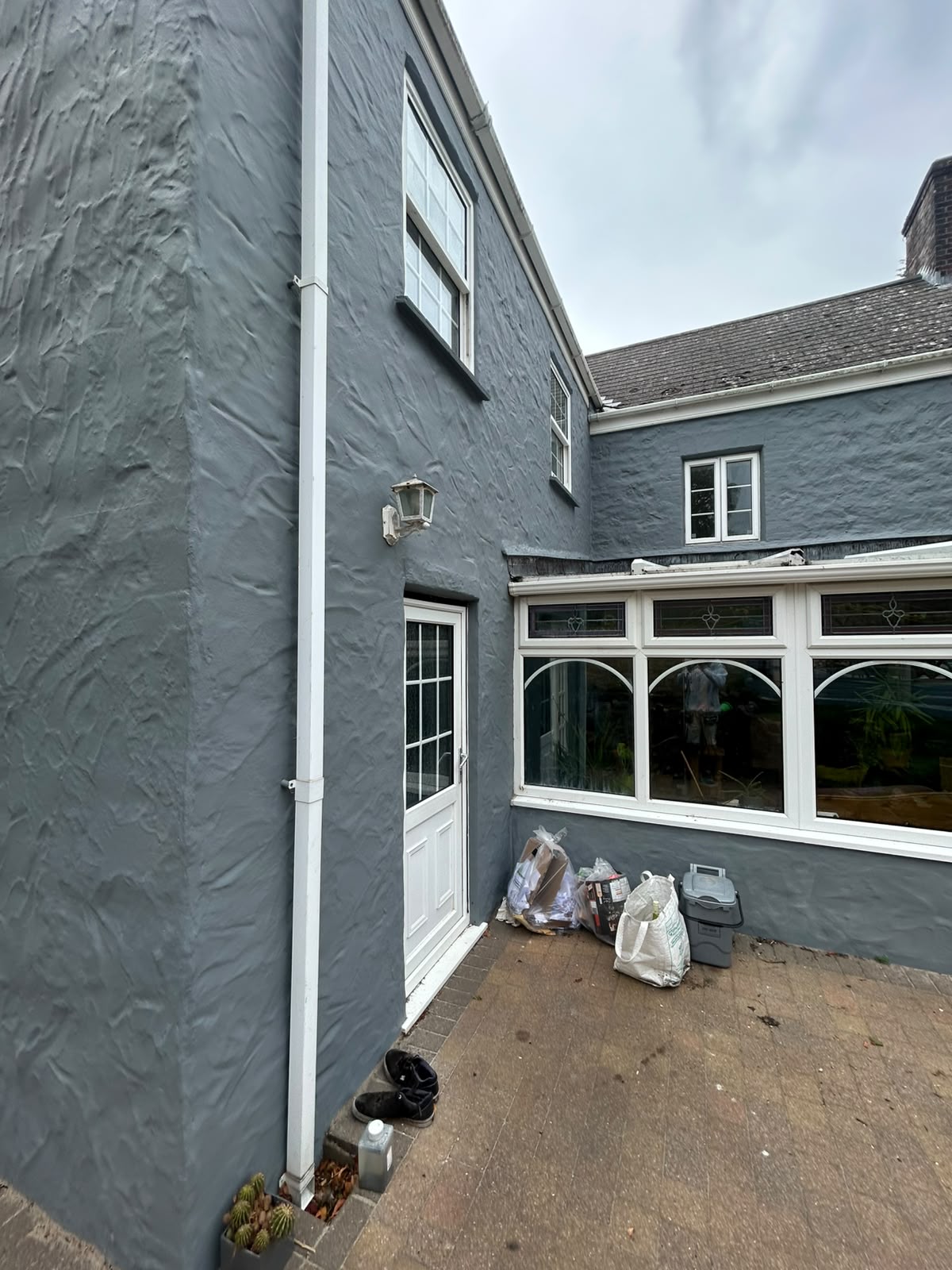
I get the same phone call every April. The sun comes out, someone looks up at their house properly for the first time in months, and they don't like what they see. Flaking sills. Green streaks down the render. A front door that's gone chalky.
And I have to tell them I'm booked until July.
That's not me being awkward. It's just how exterior work goes on this island. There's a limited window of decent weather, everybody wants their house done inside that window, and there are only so many of us doing it. So if you want your place painted next spring, the time to sort it is now, not when the daffodils are out.
Here's how the season actually works, what the job costs, and why our weather in particular is hard on paint.
When is the best time to paint the outside of a house in Guernsey?
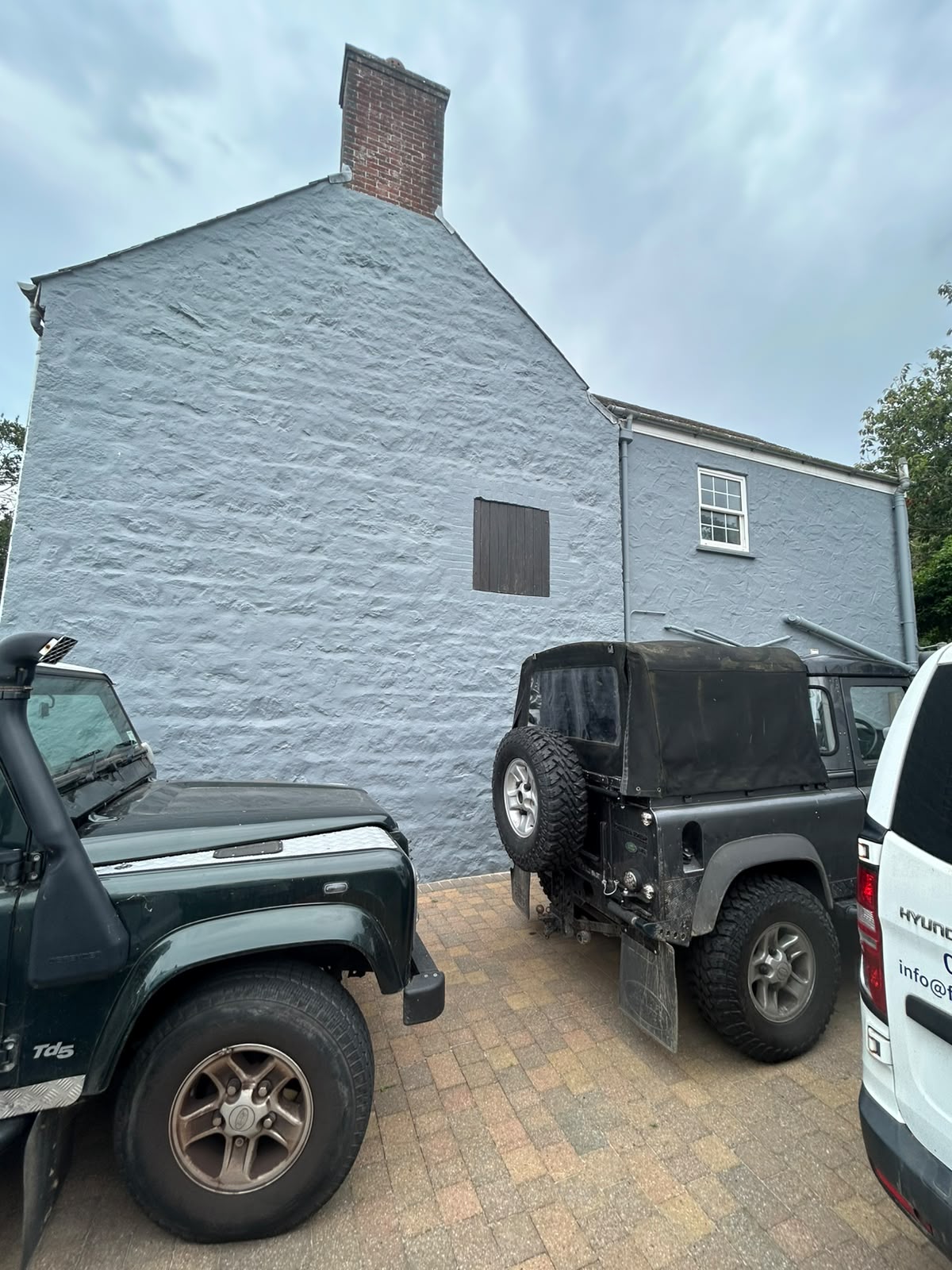
The best time for exterior painting in Guernsey is between April and early October, with May, June and September usually the sweet spots.
That's down to two things: temperature and moisture.
Most exterior masonry and wood paints specify a minimum application temperature of 8°C, and the surface needs to be genuinely dry, not just dry to a quick touch. Guernsey's coldest month is February, with an average temperature of 6.8°C. Even on a bright winter day when it feels pleasant enough, the wall itself is often sitting below that threshold, and it holds moisture from the night before well into the afternoon.
Paint applied in those conditions doesn't cure. It looks fine when you walk away and then it peels, blisters or fails within a season. I'd rather turn work down than do that to someone's house.
The other half of it is rain. We get around 840mm a year here, and autumn is our wettest stretch. By late October you're gambling on getting three or four consecutive dry days, which is what a proper exterior job needs.
So why book before spring rather than in it?
Because everyone books in spring, and the calendar fills from the front.
The pattern is the same every year. February and March are quiet for enquiries. Then the first proper warm weekend arrives and my phone doesn't stop for a fortnight. By the time most people think about it, the whole spring and early summer is gone.
Booking in winter gets you four things:
- **Your pick of dates.** Want it done before you host something in June, or while you're away in May? Book in January and that's straightforward. Book in April and you take what's left.
- **Time to do the prep properly.** Exterior work is mostly preparation. Knowing about a job months ahead means I can plan the right amount of time for it rather than squeezing it in.
- **Problems caught early.** Winter is when the damage shows. If I come and look at your house in February and find rot in a window sill or a cracked render patch letting water in, that's a repair booked for spring. Leave it until you notice it yourself in August and you've had another wet winter making it worse.
- **No panic pricing.** Nobody does their best work in a rush, and nobody gets their best price when they need someone urgently.
What Guernsey weather does to exterior paint
Our conditions are genuinely different from a house in the middle of England, and it matters for how often you need to repaint.
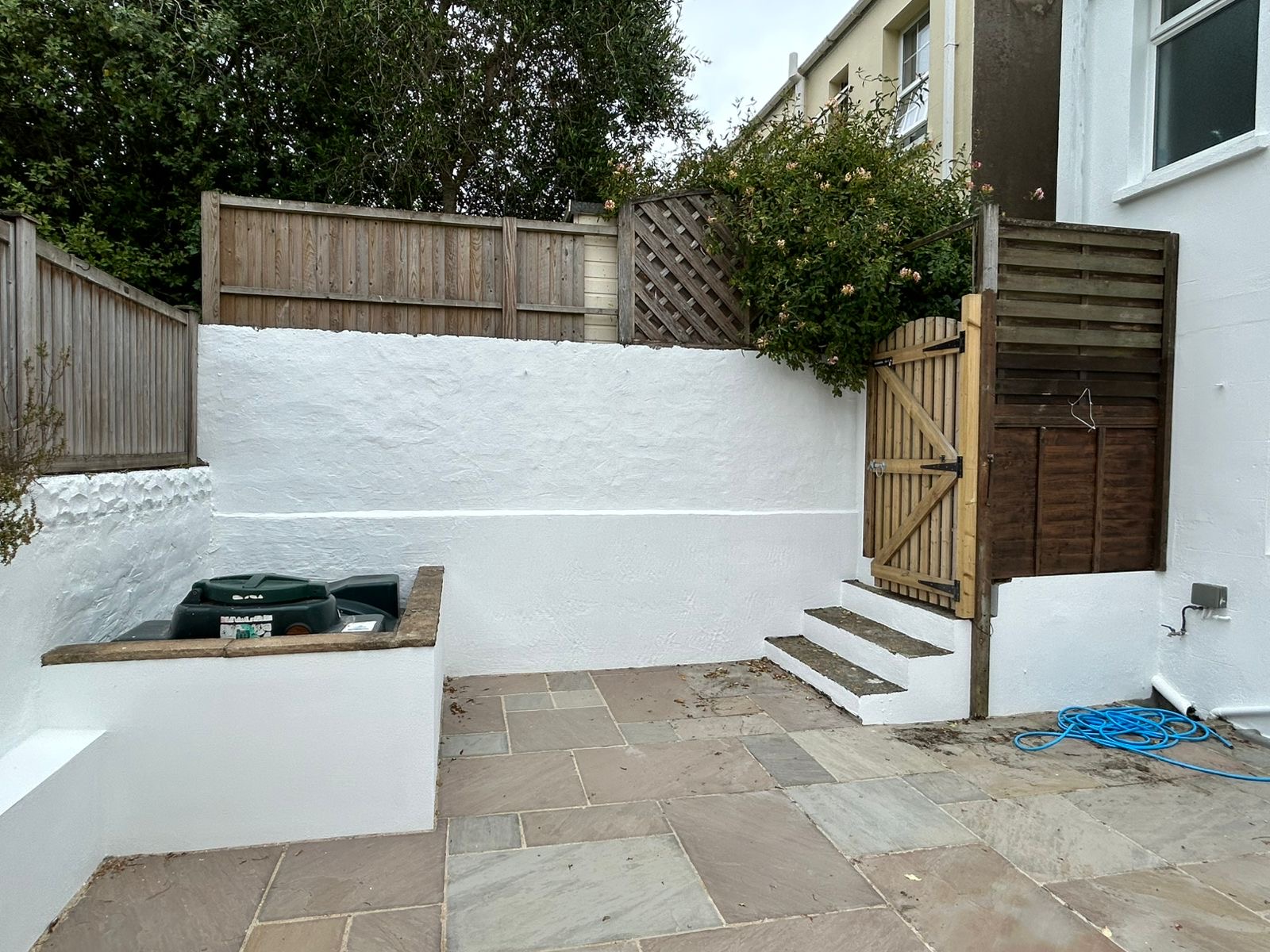
**Salt.** Prevailing winds come in off the Atlantic carrying salt, and it deposits on everything. On west coast properties around Cobo, Vazon, Perelle and Rocquaine you can taste it in the air on a rough day. Salt sits on paintwork, holds moisture against the surface, and works into any tiny gap it can find. It's the single biggest reason exposed Guernsey properties need repainting sooner than sheltered ones.
**Driving rain.** It's not the amount of rain that does the damage so much as the direction. Rain coming in horizontally on a westerly gets into places vertical rain never reaches. Under sills. Behind fascias. Into hairline cracks in render.
**Sun.** People are surprised by this one. Guernsey averages 1,888 hours of sunshine a year, which is more than most of the UK. South and west facing walls take real UV punishment, and it's why colour fades unevenly around a house. The north side often still looks fine while the south side has gone flat and chalky.
**Damp and humidity.** The climate here is oceanic, which is a polite way of saying humid nearly all the time. Surfaces dry more slowly than they would inland, which is exactly why the painting window is narrower here than the calendar suggests.
The practical upshot: a sheltered inland property might comfortably go 8 to 10 years between exterior repaints. An exposed coastal one might need doing every 5. Anyone who quotes you the same lifespan regardless of where your house sits hasn't thought about it properly.
What does exterior painting cost in Guernsey?
These are the ranges I quote most often. Every house is different, so treat them as a guide rather than a price list.
| Job | Typical cost |
|---|---|
| Windows, doors and woodwork only, average house | £950 to £1,800 |
| Render or masonry walls, small terrace or bungalow | £1,800 to £3,200 |
| Render or masonry walls, average 3 bed semi | £3,000 to £5,500 |
| Full exterior, larger detached property | £5,500 to £9,000 |
| Scaffolding, where the job needs it | £900 to £1,800 |
| Repairs, filling and rot treatment | quoted separately after inspection |
If your paintwork is badly flaking or the render has blown, budget more. Stripping back and stabilising a badly weathered exterior can add £900 to £2,800 to a job before a drop of finish paint goes on, and it is not something worth skipping.
What moves the number:
- **Access.** A two storey house I can reach from ladders is one price. Scaffolding or a tower changes things.
- **Condition.** Sound paintwork that needs a clean and two coats is straightforward. Paintwork that's flaking back to bare surface needs stripping first, and that's where the hours go.
- **Repairs.** Rotten sills, cracked render and failed sealant all need sorting before painting. Paint doesn't fix water ingress, it just hides it for a while.
- **Surface type.** Smooth render, pebbledash, painted granite and timber all behave differently and take different amounts of material.
- **Exposure.** A very exposed property may want a higher spec coating, which costs more up front and lasts longer.
For a fuller breakdown across all types of decorating, see my guide to what a decorator costs in Guernsey.
What's actually involved in an exterior repaint
**Inspection and quote.** I walk the whole property, look at every elevation, and check the bits people never look at, which is usually where the problems are. You get a fixed written price.
**Cleaning.** Everything gets washed down. On coastal properties this matters more than people realise, because painting over salt deposits is painting over a problem.
**Repairs.** Rotten timber cut out and replaced or filled. Cracks raked out and made good. Old failed sealant cut away and renewed.
**Preparation.** Scraping, sanding, priming bare areas. This is the majority of the labour on nearly every exterior job, and it's the entire difference between a repaint that lasts eight years and one that looks tired after three. You can see how we work through it on our exterior painting service page.
**Painting.** Correct primer or stabiliser where it's needed, then two full coats. No thin single coats to save time.
**Final check.** I walk round with you at the end. Anything you're not happy with gets sorted before I pack up.
How long should an exterior repaint last?
On masonry and render, expect 8 to 10 years on a sheltered property and around 5 to 7 on an exposed coastal one.
Exterior woodwork is shorter. Windows, doors and sills take the worst of the weather and typically want doing every 3 to 5 years, sooner if they face west into the wind.
The single best thing you can do to extend it costs nothing: rinse salt off any sea facing paintwork with fresh water a couple of times a year. It genuinely helps.
Common questions
Can you paint the outside of a house in winter in Guernsey?
Realistically, no. Between November and March the surface temperature is usually below the 8°C minimum most exterior paints need, and the walls rarely dry out properly. Some sheltered woodwork can be done on a good run of dry days, but full masonry work should wait for spring.
How far ahead should I book exterior painting?
For spring and early summer work, book between January and March. For late summer, book by around May. I've had years where the whole season was gone by the middle of April.
Do I need scaffolding?
Not always. Most two storey Guernsey houses can be done safely from ladders and a tower. Anything higher, or with awkward access, may need scaffolding, and I'll tell you at the quote stage rather than surprising you later.
What happens if it rains during my job?
It's Guernsey, so it will at some point. I plan around the forecast and work on whichever elevation is dry and sheltered. It can push a job by a day or two, which is another good reason not to book into the last fortnight of the season.
Should I repaint the same colour?
You don't have to, but going lighter over dark, or dark over light, sometimes means an extra coat. Worth mentioning at the quote stage so it's priced properly.
Is it worth paying more for a premium exterior paint?
On an exposed coastal property, yes. The difference in material cost across a whole house is fairly small next to the labour, and a better coating on a west facing wall can add years before you need me back.
Planning work on the inside of your home? See how our interior painting service in Guernsey works, or for the outside of your property, read about our exterior painting service, including the preparation involved before any paint goes on.
Keep reading
If your house needs doing next year, get me out to look at it over the winter. I'll tell you honestly what it needs, whether anything wants repairing first, and give you a fixed price. Then we put a date in for spring and you don't think about it again. Over 20 years painting Guernsey homes, in every kind of weather this island throws at them.